
Schema Markup Services That Make Your Pages Machine-Readable
Google and every major AI assistant read your markup before they trust your writing. We audit, build, and maintain the structured data that makes your pages eligible for rich results and easy for AI engines to cite.
Missing Schema Is a Visibility Tax You're Already Paying
Most sites either have no structured data, or have it bolted on by a plugin that guesses at the details. Both cost you the same thing: being skipped over.
You Lose Rich Results You've Already Earned
A page can rank well and still show as a plain blue link if Google can't confirm the structured data behind it. Breadcrumbs, product prices, review stars, and event details all depend on markup Google trusts, not just content it can crawl.
Chatbots Cite Structure, Not Just Prose
ChatGPT, Perplexity, and Google's AI Overviews lean on explicit entities and Q&A pairs when deciding what to quote. Our AEO services work upstream of this: schema is the layer that makes your answers extractable in the first place.
Auto-Generated Markup Often Fails Validation
Default plugin schema frequently ships with placeholder values, duplicate Organization blocks, or FAQ text that no longer matches the visible page. That mismatch is exactly what quietly drops rich results.
It Gets Worse With Every New Page
Every page published without correct markup is another page a competitor's structured data can beat for the same rich result or AI citation, even when your underlying content is stronger.
Same Page, Same Ranking. Very Different Result.
Structured data does not change what your page says. It changes how much of it search engines are able to show, and how confidently AI tools can quote it. Here is the same product page, with and without it.
Illustrative example using Product, Offer and Review markup on a store page. Ratings must come from genuine on-site reviews, and rich result display is always at Google's discretion.
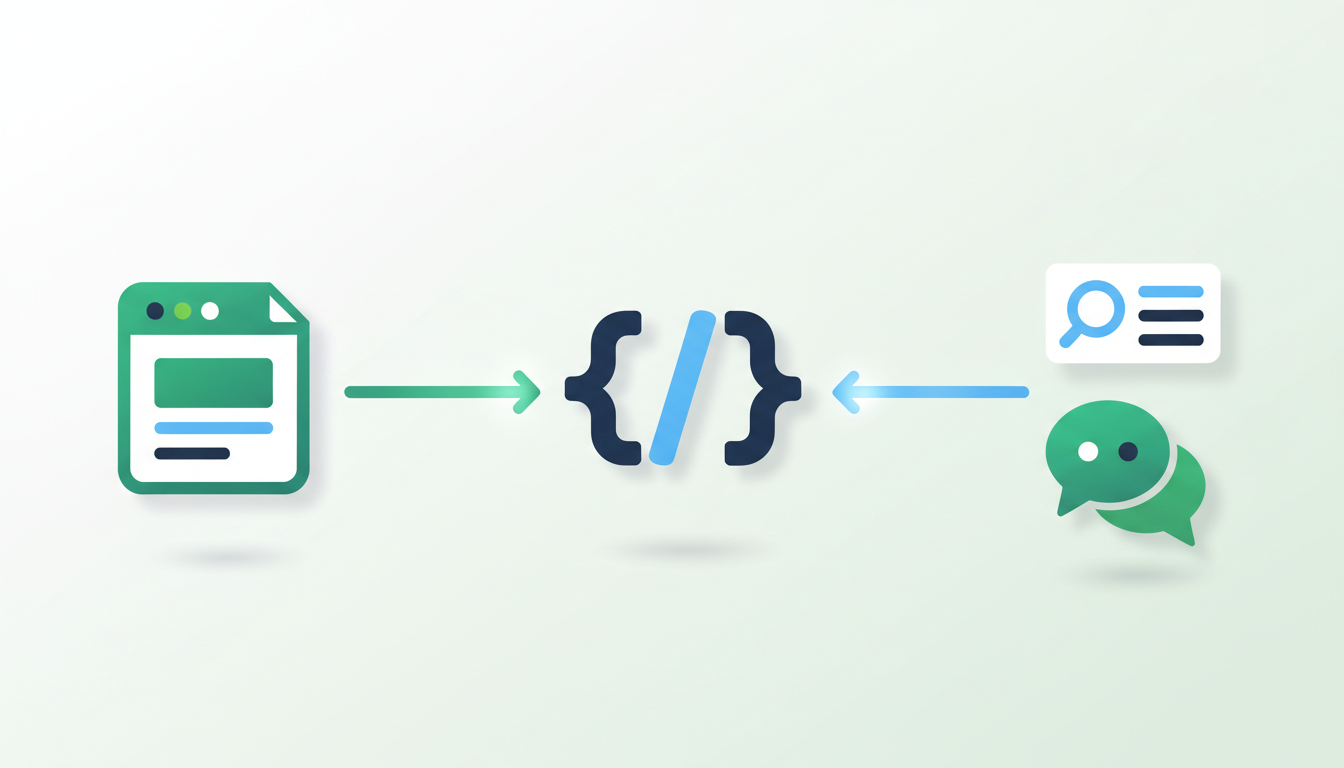
One clean implementation serves both traditional search and AI assistants.
One Layer of Code, Two Kinds of Visibility
Schema markup sits invisibly behind your page and tells machines exactly what each part of it means.
Your content stays the same
Visitors see the page you already have. Nothing about the design or copy has to change.
JSON-LD describes it precisely
Your services, organization, FAQs, and products become labelled entities with clear relationships.
Search and AI read it with confidence
Google can qualify the page for rich results, and AI engines can match your answers to the questions people ask.
Our Schema Markup Services
A complete, hands-on service: we audit what's broken, build what's missing, and keep it accurate as schema.org and your site both evolve.
Structured Data Audit
We crawl your site, check every existing schema block against Google's guidelines, and flag errors, warnings, and missed opportunities page by page.
Schema Type Implementation
Hand-coded JSON-LD for the types that fit your pages: Service, Organization, FAQPage, Article, Product, Review, LocalBusiness, and BreadcrumbList.
Entity & Knowledge Graph Alignment
We connect your Organization and Person markup to one consistent entity across the site, so search engines and AI tools see one brand, not several fragments.
Validation & Testing
Every block is checked in Google's Rich Results Test and the Schema Markup Validator before it goes live, not after something breaks.
Ongoing Maintenance
Schema.org types and Google's supported properties change over time. We monitor and update your markup so it never quietly goes stale.
AI-Readiness Pass
We shape Q&A and definition content to pair cleanly with FAQPage and Article markup, complementing our technical SEO for AI crawlers work.
Schema Types We Implement Most Often
We choose types based on what Google and schema.org actually document for your page type, not a one-size-fits-all template.
Organization
Defines your brand as one entity, with logo, social profiles, and contact details tied together.
Service
Describes what a service page offers: provider, service type, and area served, in terms machines recognize.
FAQPage
Marks up genuine on-page Q&A so each answer is easy to extract. Google now limits FAQ snippets to a few authoritative sites, so we use it for clarity, not decoration.
Article
Flags headline, author, and dates on blog and resource content, supporting authorship signals and citation.
Product & Offer
Price, availability, shipping, and returns details that make product listings eligible for merchant features.
Review & Rating
Implemented only where genuine, verifiable reviews exist, in line with Google's review snippet policies.
LocalBusiness
Covers hours, location, and service area for businesses that depend on local and map-based search.
BreadcrumbList
Shows your site hierarchy in results and helps crawlers and AI agents understand how pages relate.
From First Crawl to Ongoing Monitoring
A clear, auditable six-step process, with every change validated before it ships.
Full Markup Audit
We scan every page type and document which schema exists, which is broken, and which is missing entirely.
Schema Mapping
We map the right schema.org type to each template, based on what that page is trying to rank and get cited for.
Implementation
Clean JSON-LD, written by hand and added to your templates or pages, matched exactly to the visible content.
Validation
Every template is tested in the Rich Results Test and the Schema Markup Validator, and fixed before launch.
Search Console Tracking
We watch the enhancement reports for new errors, coverage drops, or newly eligible rich result types.
Quarterly Review
As you publish new content and schema.org evolves, we revisit and update markup so it keeps working.
Markup Built to Actually Validate
We would rather explain plainly how this service works than promise numbers nobody can verify in advance.
Hand-Written, Not Auto-Generated
Every schema block is written against your actual page content, not pulled from a generic plugin template with placeholder fields.
Grounded in Primary Documentation
We implement against Google's structured data guidelines and the current schema.org vocabulary, not outdated blog advice.
No Lock-In to One Plugin
Markup is built to survive a theme change or plugin swap, instead of disappearing the moment you deactivate a tool.
Frequently Asked Questions
Straight answers to the questions we hear before a project starts.
No, and we won't tell you otherwise. Schema doesn't directly boost rankings on its own. What it does is make your eligible content qualify for rich results, help search engines and AI systems understand your content correctly, and remove a real barrier to visibility that bad or missing markup creates.
It depends on the page. Service pages benefit most from Service and Organization schema, blog content from Article and FAQPage, guides from HowTo, and local businesses from LocalBusiness. We decide this during the audit rather than applying the same types everywhere.
Properly implemented JSON-LD is a small block of text with no rendering cost and no effect on page speed. Every change we make is tested in a staging view before it touches your live pages.
Plugins are good at generating a baseline, generic block. They don't know which optional properties Google actually rewards, can't tell when your visible FAQ text drifts from the markup, and rarely cover Service, HowTo, or entity-level detail well. We audit what's already there and fix or extend it rather than starting over unnecessarily.
Yes. Product, Offer, and Review schema for e-commerce, and LocalBusiness schema with service area, hours, and location details for local and multi-location businesses, are both part of this service.
AI assistants favor content that is already broken into clear entities and question-answer pairs, which is exactly what FAQPage, Article, and Organization schema describe. This page's own schema is set up the same way, as a working example rather than just a claim. See our AEO services and GEO services for how we build on this foundation.
We review markup quarterly as a baseline, and sooner if Search Console flags a new error, your site changes templates, or schema.org updates a property we rely on. Ongoing maintenance is included in the service, not billed as a separate surprise.
Make Your Content Readable
by Machines, Not Just People
Start with a free audit of your current markup. We'll show you exactly what's missing, what's broken, and what it would take to fix it.