
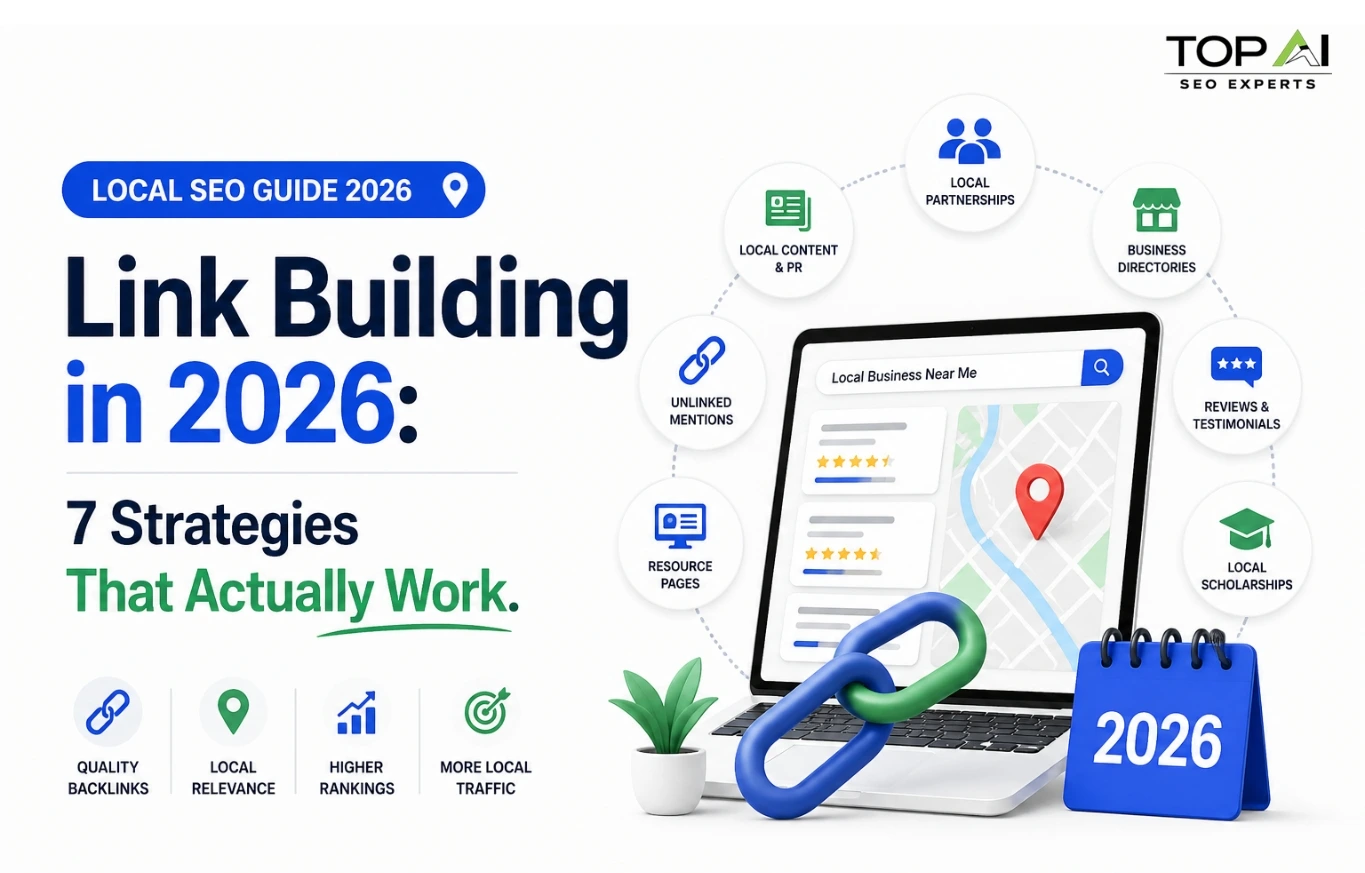
Backlinks remain the second most important ranking signal in Google Search, right behind content relevance. What has changed is the bar for what counts. This guide covers the seven strategies that are actively generating high-authority links in 2026, along with the tactics that have stopped working and why.
more backlinks on position #1 pages vs. positions 2 through 10 on the same SERP (Ahrefs)
of SEO professionals rate digital PR as the most effective link building tactic (Editorial.link, 2026)
of cold outreach emails receive any reply, across 12 million emails studied (Backlinko / Pitchbox)
Before the strategies, one framing point that the data makes clear. In 2026 Google evaluates links on relevance, editorial context, and authority of the linking domain. A single link from a high-authority publication in your niche outperforms dozens of links from generic low-authority directories. Volume thinking is what gets sites penalised. Quality thinking is what builds durable rankings.
What Google Actually Values in a Backlink
Understanding what makes a link valuable shapes every decision about which tactics to prioritise. Not all links pass the same equity, and links from the wrong sources can actively harm a domain's standing.
| Factor | Why It Matters | Impact |
|---|---|---|
| Domain Authority | Links from established, high-trust domains carry significantly more equity. A link from a DR 80+ publication can move rankings faster than 100 low-authority links. | Very High |
| Topical Relevance | A link from a page covering a related topic passes stronger relevance signals than a link from an unrelated high-authority domain. Context matters to the algorithm. | Very High |
| Editorial Placement | Links placed naturally within body content by an editor, rather than in a footer, sidebar, or paid placement section, carry more weight and are less likely to be discounted. | High |
| Anchor Text | Descriptive, varied anchor text looks natural. An over-optimised profile where most links use the same exact-match keyword anchor is a clear manipulation signal. | Moderate |
| Link Velocity | Sudden spikes in new backlinks look manipulative. Consistent, steady link acquisition over time is what a naturally growing authority profile looks like. | Moderate |
| Do-Follow vs No-Follow | Do-follow links pass equity. No-follow links do not pass direct equity but contribute to a natural-looking profile. A profile with zero no-follow links is unusual and may be flagged. | Supporting |
7 Link Building Strategies That Work in 2026
Digital PR has become the dominant link building strategy by a clear margin. In the 2026 State of Link Building survey of 500 SEO professionals, 34% named it their best-performing method, nearly double the 18% who said the same for guest posting. The reason is straightforward: journalists and editors need facts to cite, and if your site publishes original data, they link to it as the source.
The most effective digital PR assets are original research reports, industry surveys, proprietary data sets, and statistical roundups. When a journalist covering your industry writes "according to a 2026 study by [Brand]," that is an editorial link from a publication with decades of domain authority behind it. No other tactic produces that type of link at scale.
Execution requires four steps: identify a data angle your target publications would cover, collect or compile the data (surveys, scraping public datasets, aggregating primary research), publish it with a clean, citable landing page, and pitch it directly to journalists covering that beat. Tools like Connectively (formerly HARO), Qwoted, and Featured.com connect brands directly with journalists actively seeking expert sources and data.
- Survey at least 200 to 300 respondents for any primary research to make it statistically citable
- Publish data in a format journalists can screenshot: tables, charts, and numbered findings work better than dense narrative
- Create a dedicated, clean URL for the research (e.g.
/research/industry-report-2026) rather than burying it in a blog post - Pitch the story angle, not the link. Subject line: "2026 data: 60% of ecommerce traffic now mobile-first" gets opened. "Please link to our report" does not.
- Follow up once, 4 to 7 days after the initial pitch. Structured follow-up sequences generate 40% more backlinks than single-send campaigns.
Guest posting still works. 64.9% of link builders use it, and sites with guest post backlinks have a 30% higher probability of earning featured snippets. What has changed is the bar for where and how it is done.
Google-valued guest posting targets publications your target audience actually reads, produces content that would be editorially accepted regardless of the link, and includes contextual links relevant to the article topic. Guest posting purely to place links on any site that accepts submissions is a spam pattern that Google's systems are increasingly good at detecting and discounting.
Prioritise topical relevance over raw domain authority when choosing publications. A link from a lower-authority site that is genuinely read by your audience delivers more relevance signal than a link from a high-DA domain with no topical connection. Set minimum quality standards: pitch word counts of 1,000 or more, require editorial review, and write for the publication's readers rather than for anchor text placement.
- Vet publications by checking whether they have a real editorial team and engaged readership, not just a high domain rating
- Write about topics your expertise qualifies you to cover. Thin AI-generated guest posts are being actively identified and discounted by Google's quality systems
- Vary your anchor text across guest post placements. A profile where every guest post uses the same exact-match anchor is a clear over-optimisation signal
- Personalise every outreach pitch. Personalised subject lines increase response rates by 33%
- Use LinkedIn and X for outreach in addition to email. SEOs using social media for link outreach average 22% more links per month than email-only outreach
Broken link building involves finding dead links on relevant, high-authority sites and offering a working replacement from your own content. It works because you are solving a real problem for the site owner rather than asking for a favour. A webmaster with a broken link they did not know about has a concrete reason to respond and act on your outreach.
The approach: use Ahrefs or Semrush to identify broken external links on authority sites in your niche, find or create content on your site that genuinely replaces what the broken link pointed to, then contact the site owner with a brief, specific message pointing out the broken link and suggesting your page as a replacement. Conversion rates on this type of outreach are meaningfully higher than cold link requests because the value proposition is immediate and clear.
Broken link building is most effective as a systematic monthly process rather than a one-off campaign. Budget a few hours per month to identify new broken link opportunities in your niche, maintain a running list of your best replacement candidates, and send 20 to 30 targeted pitches per cycle.
Resource pages are curated lists of useful links on a specific topic, published by universities, industry associations, blogs, and information sites. They exist to point their readers to the best available content on a subject. If your content genuinely belongs on a resource page in your niche, the pitch is straightforward: "You link to resources about X. We published a comprehensive guide on X that your readers might find useful."
The key prerequisite is that your content has to genuinely earn its place. Thin pages, overly commercial content, or guides that rehash widely available information will not be added to a quality resource list. Your linkable asset needs to be the type of content that an editor would already want to reference if they encountered it organically.
Find resource pages using Google search operators: search for "your topic" + "useful resources", "your topic" + "recommended links", or "your topic" + inurl:resources. Prioritise pages on educational domains (.edu) and established industry organisations where available.
Linkable assets are content formats that attract links passively because they are genuinely useful to reference. Long-form content over 3,000 words generates 3.5x more backlinks than shorter articles. Sites publishing content regularly receive 97% more inbound links than those that publish infrequently. The content type that earns links consistently in 2026 is original data and research (covered in Strategy 1), but several other formats earn links reliably at lower production cost.
Free tools and calculators earn links because other sites reference them as resources. An SEO agency publishing a free keyword difficulty calculator or a mortgage broker publishing a loan comparison tool earns links from anyone who writes about the topic area and wants to point readers to a practical resource.
Comprehensive statistics pages attract links from writers who need data to cite. Compile the best available statistics on a specific topic, attribute every figure correctly, and update the page annually. Writers who find this page will link back to it repeatedly as the source.
Visual content including data visualisations, process diagrams, and original infographics earn links because publishers embed visuals from external sources and link back to the origin. Create visuals with clear branding and an explicit embed code to make attribution simple.
Unlinked brand mentions are existing references to your brand name, product, or published content on external sites that do not include a link back to your domain. Converting these mentions into links is one of the highest conversion rate activities in link building because the publisher has already demonstrated they know and value your brand.
Find unlinked mentions using Google Alerts (free), Ahrefs Content Explorer, or Semrush Brand Monitoring. Filter results to exclude pages that already link to you. Then send a brief, friendly message to the author or editor acknowledging the mention and asking if they would be willing to add a link for their readers who want to learn more.
This tactic is particularly effective after any PR event: a product launch, study publication, award, or media appearance generates mentions across multiple sites simultaneously. Set up monitoring before the event so you can capture and convert mentions within the first few weeks while they are fresh.
Competitor backlink analysis removes guesswork from link prospecting. If a publication links to three of your competitors, it is already an established source of links in your space. Your job is to find a reason for them to link to you as well.
Pull the backlink profiles of your top three to five organic competitors using Ahrefs or Semrush. Sort by domain rating and filter for do-follow, non-paid editorial links. Identify the patterns: which content formats earn the most links? Which publications link to multiple competitors? Are there resource pages, roundups, or expert contributor lists you are absent from?
The most actionable output is a prospecting list of sites that have already linked to competitors but not to you. These are warm prospects. They have demonstrated willingness to link in your space. Your outreach pitch is much easier when you can say "you linked to [Competitor] on this topic and we've published something that covers it from a different angle."
- Export competitor backlinks monthly and cross-reference against your own profile to identify new gap opportunities
- Prioritise domains that link to two or more competitors (proof they link actively in your space)
- Analyse competitor content that has earned the most links, then create a genuinely better or more current version
- Look for competitor links that came from roundup articles, expert contributor slots, or podcast show notes. These recur regularly and are easy to request inclusion in.
Want to know which of your competitors' links you can replicate?
We pull your gap analysis and identify the 20 highest-value link opportunities you are missing right now.
Outreach That Gets Replies
Only 8.5% of cold outreach emails get a reply across a sample of 12 million emails. Most link building outreach fails not because the link opportunity is weak but because the pitch is generic, self-serving, and easy to ignore. The principles below apply across every strategy above.
Research Before You Write
Reference something specific about the site or the article you are reaching out about. "I read your piece on X from last month and noticed you referenced [topic]" shows you actually read it. Generic openers like "I came across your amazing website" are immediately identifiable as template blasts and get ignored.
Lead With Value, Not the Ask
The first sentence should make clear what you are offering, not what you want. "I found a broken link on your resources page that might be frustrating your readers" gets read. "I am reaching out about a link building opportunity" gets deleted. Make the value proposition obvious before making any request.
Keep It Short
Editors and journalists receive hundreds of pitches per week. Three short paragraphs outperform five long ones. State who you are in one sentence, explain the value in two sentences, and make the ask in one sentence. Any email longer than 150 words should be cut.
Follow Up Once
A single follow-up sent 5 to 7 days after the initial email recovers a meaningful percentage of replies from people who intended to respond and forgot. More than one follow-up damages the relationship and marks your domain as a spam sender in outreach tools that track these patterns. One follow-up, then move on.
Tactics to Avoid in 2026
Google's spam detection systems have become significantly more capable at identifying manipulative link patterns. The tactics below are either ineffective, actively penalised, or both.
- Private Blog Networks (PBNs): Networks of sites created purely to pass link equity are a manual penalty waiting to happen. Google's algorithms identify PBN patterns through footprint analysis and the links are routinely discounted or flagged.
- Paid link placements with no editorial value: Paying for a link on a site that accepts anyone willing to pay, regardless of content quality or relevance, violates Google's link spam policies. These links are increasingly detected and algorithmically devalued.
- Mass directory submissions: Submitting to hundreds of low-quality business directories produces no meaningful equity gain in 2026. The signal-to-noise ratio is too low to move rankings, and a profile dominated by directory links looks unnatural.
- Link exchanges: Reciprocal link exchanges ("I link to you if you link to me") are explicitly called out in Google's link spam guidelines. Occasional reciprocal links between genuinely related sites are normal. Systematic link exchange programs are a spam signal.
- Over-optimised anchor text across guest posts: Using the same exact-match keyword anchor on every guest post is one of the clearest over-optimisation signals available. Vary anchors across brand name, partial match, topical terms, and natural phrases.
Frequently Asked Questions
Ready to Build a Backlink Profile That Compounds?
We audit your current link profile, identify your highest-value gap opportunities, and build an acquisition plan around strategies that actually work in 2026.